
🧠 Want a Healthier Brain? Try Being Creative!

🧠 Want a Healthier Brain? Try Being Creative!

By Susan H. Blanton, Ph.D.

A new study shows that doing creative things—like dancing, painting, playing music, or even playing video games—can help keep your brain younger and healthier.

Scientists looked at brain scans from over 1,400 people and used computers to figure out their “brain age.” That’s how old your brain seems based on how it works. They found that people who do creative activities often had brains that looked younger than their real age.

Even learning something new for a short time, like playing a strategy video game, helped. But the biggest benefits came from people who had been doing creative things for many years.

The study also found that creativity helps the brain stay strong in areas that usually get weaker with age. It improves how different parts of the brain work together, which helps with thinking, memory, and focus.

The best part? These benefits were seen in people from all over the world, no matter what kind of creative activity they did.

So if you want to keep your brain sharp, try something creative! Whether it’s dancing, drawing, or gaming, your brain will thank you.

Mining DNA for Alzheimer’s Secrets

Mining DNA for Alzheimer’s Secrets


By Josh Baxt

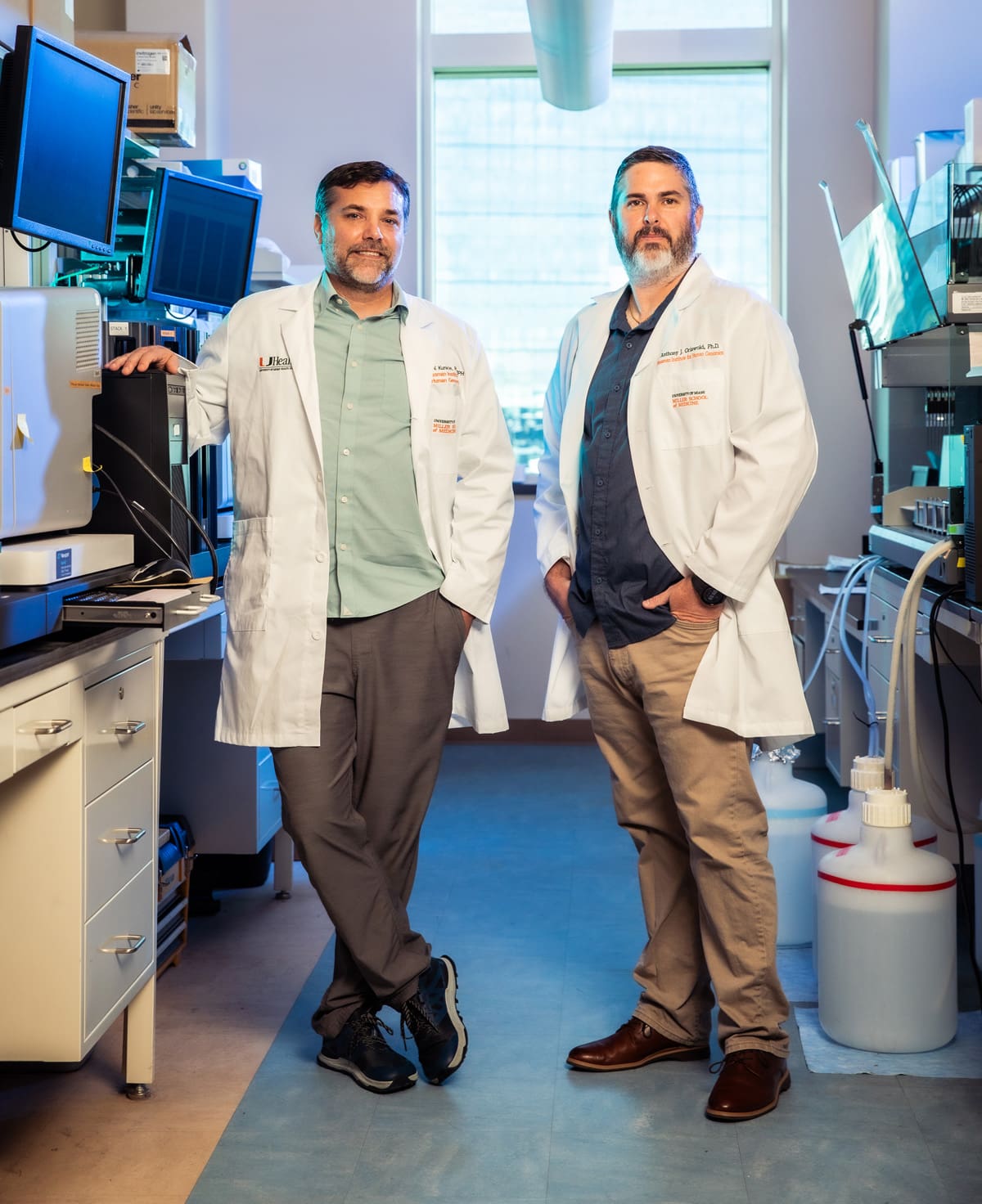
Researchers at the John P. Hussman Institute for Human Genomics (HIHG) at the University of Miami Miller School of Medicine are uncovering new insights into the genetic roots of Alzheimer’s disease, the most common form of dementia. Led by Anthony Griswold, Ph.D., and Brian Kunkle, Ph.D., M.P.H., the team is using advanced genome-wide association studies and whole-genome sequencing to identify genetic variations that influence risk and protection against the disease.

Their work casts a global net beyond populations of European ancestry to include groups from Africa, the Caribbean, and South America, revealing unique genetic markers and protective factors, such as variants in the APOEΣ4 gene. These discoveries are helping researchers better understand disease mechanisms and uncover new therapeutic targets.

The HIHG team is also advancing early detection efforts through innovative “liquid biopsy” techniques that identify Alzheimer’s biomarkers in blood plasma. This approach could allow for earlier diagnosis and more personalized treatment strategies.

“Every time we bring in a new population we’ve never studied before, we find new genetic markers,” said Dr. Griswold. “That’s going to help us develop diagnostic tests and medicines that could eventually help all people with Alzheimer’s.”

For the full story, click here.

U.S. Dementia Costs to Exceed $780 Billion This Year, USC-Led Research Finds

U.S. Dementia Costs to Exceed $780 Billion This Year, USC-Led Research Finds

Source: USC Schaeffer Institute for Public Policy & Government Service
Published Date: April 23, 2025
By USC Schaeffer Center

A new study from the USC Schaeffer Center reveals that the total economic burden of Alzheimer’s disease and related dementias in the United States is projected to reach $781 billion in 2025. This comprehensive estimate includes not only direct medical and long-term care costs but also factors in lost earnings and diminished quality of life for both patients and their caregivers.

A research team, led by Julie Zissimopoulos, created a special computer model that uses information from national surveys and health records to estimate how much dementia costs each year. This model takes into account the different stages of the disease and looks at how new treatments and care plans could affect costs.

Key findings from the study include:

– Medical and long-term care expenses for dementia patients are estimated at $232 billion for 2025, with $52 billion paid out-of-pocket by patients and families.

– Medicare and Medicaid are projected to cover $106 billion and $58 billion, respectively.

– The decline in quality of life is valued at $302 billion for patients and $6 billion for caregivers.

– Unpaid caregiving accounts for 6.8 billion hours, valued at $233 billion.

The study emphasizes the importance of understanding the full scope of dementia’s economic impact to inform policies and interventions aimed at reducing this burden. The researchers plan to update these estimates annually to track changes over time.

Skip to content